History books have more than one edition; facts are malleable. Facts are presumed to be secure, but in actuality they shirk being anchored, bobbing up and down, sinking quietly out of sight. How fiction is represented affects how we render fact in our consciousness. Tellers of stories have an agenda, which will in turn affect their telling. Their agenda might be educational. It might be founded in a desire to promote awareness, to prevent future generations from suffering similar pain — but it might also be to sell more hamburgers. History has traditionally been told by the victors, by the power-hungry, by the people who could afford to tell it. But the opinions of the victorious and the moneyed are not infallible. Objectivity is impossible, as all information must travel through a subject. High-commanding German officials would probably have portrayed World War II quite differently than Hollywood has. It has even been denied by some groups that the Holocaust ever happened. History is not linear.
The ship's upturned hull became a site of struggle, rescue, and grief. If you had been on the upper deck, you had a better chance of survival. But if you were on the lower decks, you wouldn't have made it. If they didn't drown, passengers below suffocated. Groups of people were found trapped in piles, with fingernail marks on the doorframes from their scratching to get out. Others were discovered speared by broken mirrors, toppled by mounds of luggage or pressed helpless beneath the piano.
The movie Titanic cost $200 million to make. In order to make the movie look real, a replica of the ship was built that stretched 775 feet in length. To simulate the sinking, the ship replica was dunked in a 17 million gallon tank of unheated water. James Dawson had been on board the real Titanic; in the movie his name is Jack. When Jack and Rose first kiss, it is in front of a real, not simulated, sunset. In postproduction of the movie, computer animators added fake breath to the victims. While the movie was being filmed off of the coast of Mexico, they had to make it look as if it was incredibly cold.
I went to see the Titanic (the movie). It was during the holidays, and I was one of the only people in the audience. I sat in the middle of the theater and had my own private showing. The special effects impressed me. The drama fed my imagination. I left feeling heavier than when I arrived, in disbelief of the magnitude of the tragedy, of the intensity of the suffering, and of the high price of matinee showings.
It's not necessarily a problem that I didn't walk away from the movie with a wealth of “facts” about the Titanic . Maybe that's not the point of a blockbuster production. Maybe it's entertainment. However this perspective sets up a false dichotomy that fiction is entertainment, and that history is truth. This doesn't leave room for the possibility that history itself contains elements of “fiction,” and that fiction contains elements of history. Entertainment includes elements of both fact and fiction, a position that can make millions for Hollywood and that can significantly influence the interpretation of past events. Under the guise of entertainment, popular culture can bastardize tragedy, melt it down and remold it into keychains.
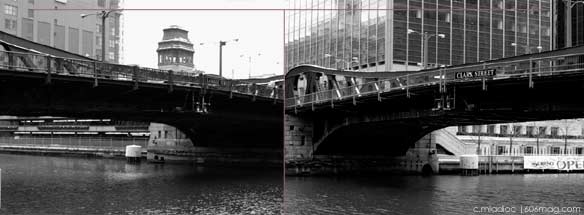
Temporary morgues were set up to house the bodies until family members could identify the deceased. Rescuers fought to save as many victims as possible, but many times their attempts remained futile. Twenty-two entire families were wiped out in the event. Even if you knew how to swim, you might have been dragged down by someone who didn't. Parents clutched each other impatiently on shore as infants' bodies, blue and stiff, were carted away from the scene. Since there was no system of organization, the identification process of the dead spanned multiple days. Chicago fell into mourning, the raw stench of decaying carnage a constant reminder of the tragedy that could have been avoided. It was already known the Eastland listed in water. The additional lifeboats that added to its top-heavy state were never even used, because there was simply no time. But the mistakes that bred the catastrophe were never accounted for. Victim's families never received any compensation. The Eastland was turned back over, and shortly thereafter went back to sea.
I could argue that I have recounted this event truthfully, that I have researched facts and quoted real survivors. I could emphasize a desire to raise consciousness of this tragedy, a horror that has remained obscure to many of the general public. The Eastland did exist, and it did roll over in the Chicago River: this is a serious historical event that deserves comparable representation. I could also argue that I have exaggerated this story for effect, that I have fabricated details, and that I could have fictionalized character's names in order to harness readers and demand their emotional investment.
Keep your eyes peeled. Watch the marquees around the city: the Eastland disaster might be the next big blockbuster. This tragedy is ripe for further exploitation. (back to page one)
|