I just couldn't figure it out yet.
I remember an article Pico Iyer wrote for Salon.com discussing the reasons why we travel. He suggested, “We travel, initially, to lose ourselves; and we travel, next, to find ourselves,”.
In a way, I agreed. I wanted to lose myself, leave my paltry existence for a new unexplored life. But I'm curious about the second part, the part about finding ourselves.
I believe on some level, we all feel alone, that too many times others do not understand us or care to know who we are. We trick ourselves into thinking that the Internet and cell phones have brought us closer together, when they have really pulled us apart. We do not walk around parks or to storefronts, talking to each other anymore; we would rather stay in a chat room. We do not turn to our neighbor on the el to ask for the time because she is yapping on her flip phone. The isolation is sometimes chilly .
All we have is our stories of who we are and what we want to be. Maybe that's it. Maybe that is what drives me to travel more than just escaping. Maybe I want to take my stories, and connect them with those with similar stories.
A friend of mine traveled with his father this past summer to many old Civil War sites. Why? He confessed to his desire to connect with the past, to history. I believe, more broadly, that is why we are so compelled to visit landmarks, memorials and ruins. Pompeii. The Parthenon. Ground Zero. We travel to them to connect, be a part of history, to not feel alone.
It is in that connection of story to story that we feel meaning and significance, because it is then our story becomes a part of the greater human story of struggle and survival. For some of us, historical landmarks are simply not enough. We need people. We need our story to connect with other people's stories.
My stop was quickly approaching. I closed my notebook, where I was scratching down thoughts throughout the ride, and packed my bag. I was ready to meet people, talk with them and hopefully connect with them.
Near Loyola University 's Lake Shore campus is the Chicago International Hostel . The place was small and cozy, and was everything the mega-hostel was not. There were a handful of chairs and tables spread around the lobby. A sign above a basket of bagels read “Please, take one before you go.”
In the corner of the room were two couches in an L-shape facing a modest-sized TV set. Three travelers from Korea , two men and a woman, were eating a breakfast of Subway sandwiches on the couches. I approached them.
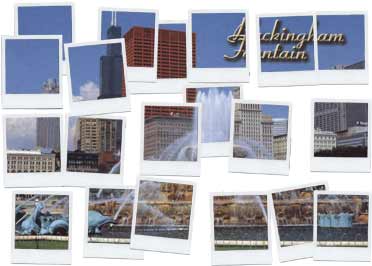
English was not their first language, so we tried our best to communicate. I tried to ask them, as hardcore travelers of Chicago, what kinds of things they had seen and what types of places they will see next. Yi Kyonng Tae, who was 26, said so far that they had viewed the city from the Sears Tower observation desk, watched the baby sharks at the Shedd and taken pictures in front Buckingham Fountain.
I frowned. I was not connecting. They were tourists. I wanted travelers.
I inquired further if there was something that he and his group planned to do that was off the tourist's conventional path.
Tae nodded and said, “Our real reason for coming to Chicago …” |